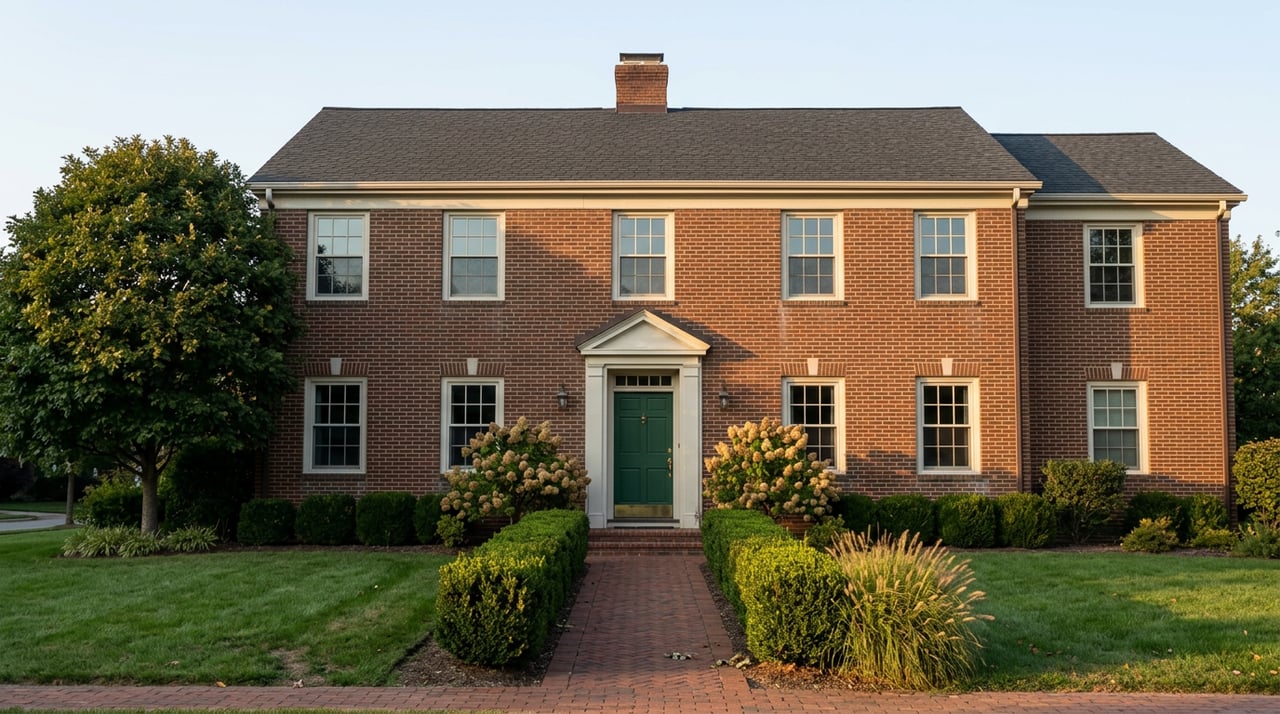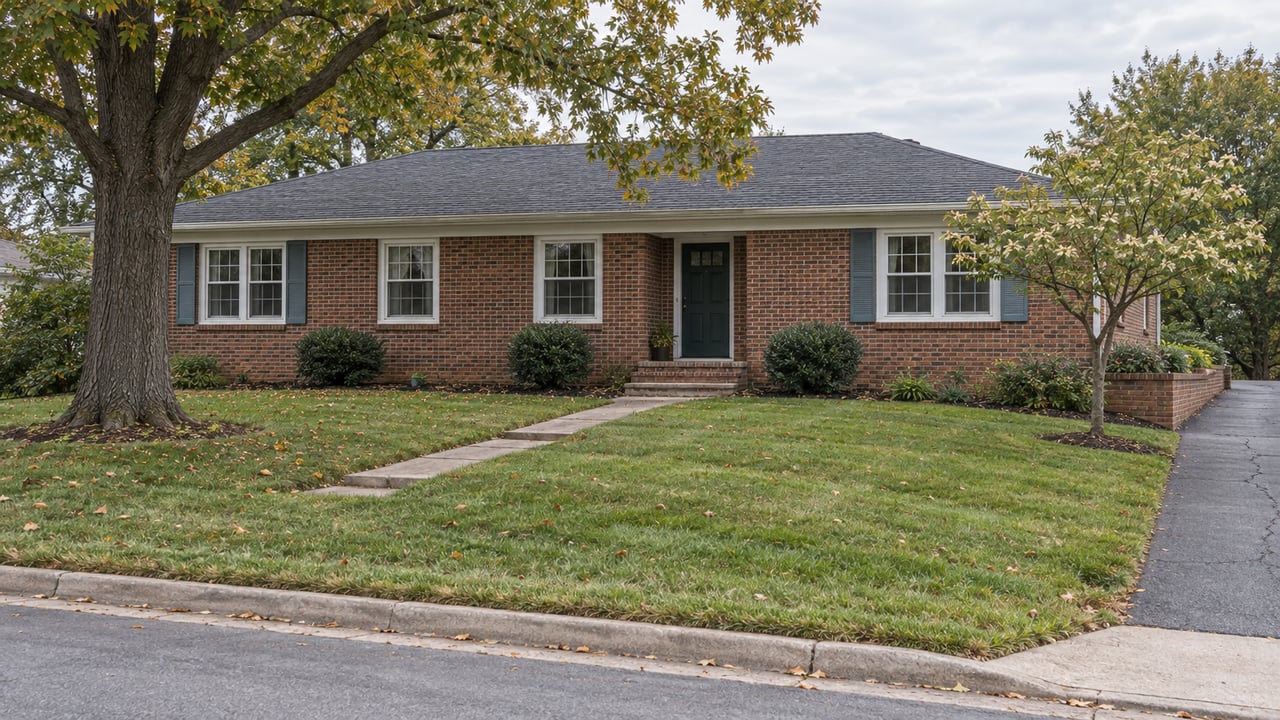
Two ramblers sit within sight of each other on the same Vienna Woods street. Same year built, within a few years. Same square footage, give or take a hundred feet. Same three-bedroom, one-and-a-half-bath layout that defined half of Fairfax County's post-war housing stock. One sold this year for a number that made sense against the neighborhood's older comps. The other sold for well over a hundred thousand dollars more, to a builder, who tore it down within weeks.
Nothing about the house explained the gap. The explanation was sitting outside it the whole time, in the width of the lot, the slope of the yard, and which set of zoning rules happened to govern that particular parcel. Buyers who evaluate Vienna homes on interior condition alone are pricing the wrong asset. In a town where teardown-and-rebuild has become the dominant form of new construction, the land underneath the house is frequently worth more than the house itself, and the land's value depends on variables that don't show up in a standard listing.
The Lot Is the Product, Not the Rambler
Vienna's housing stock is heavy on 1950s through 1970s ramblers, splits, and colonials, and a meaningful share of them sit on lots that have become more valuable for what could replace them than for what's currently standing. Builders and land investors working this market don't evaluate a listing the way a family does. They run a version of a renovator-versus-teardown test: if the land value alone approaches a large share of what a finished new home would sell for, the existing structure is worth nothing to the deal. It gets removed.
What makes one lot pencil out for a builder and another not is not acreage in the abstract. It's shape and terrain. A lot with 80 feet or more of frontage can accommodate a side-load garage, a detail that adds real value to the land because it lets the finished home present a wider, more formal front elevation, something buyers at the $1.5 million-plus price point expect. A narrower lot forces a front-load garage that eats into curb appeal and square footage flexibility, and it prices differently even at the same acreage.
Topography matters just as much. A flat, buildable lot lets a builder proceed straight to foundation work. A sloped one requires retaining walls and stormwater engineering that can consume tens of thousands of dollars of a project's margin before a single stud goes up. Two quarter-acre parcels a block apart, one flat and one sloped, are not the same asset even though a tax record would list them identically.
This is why a buyer touring Vienna homes in the $700,000 to $900,000 range needs to ask a different question than they would in a more conventional suburb. Not "what does this house need," but "is this lot wide, flat, and positioned in a way that makes it a target for replacement, and if so, does that change what I should be willing to pay for it as a livable house versus as raw land with a structure attached."
Two Rulebooks, One ZIP Code
Vienna adds a second layer of complexity that most buyers never think to check: whether the address they're touring sits inside the incorporated Town of Vienna or in the surrounding unincorporated Fairfax County area that also carries a Vienna mailing address. The two are not interchangeable, and the difference shows up in exactly the process that determines whether a lot is buildable, and how.
Properties inside the Town of Vienna answer to the Town's own zoning and permitting code in addition to the county's. New residential construction inside town limits requires an infill-lot plan, a grading plan, a wall-check survey, and a final house-location survey before a certificate of occupancy is issued, all reviewed by the Town's planning and zoning department. In certain design-review districts, including Windover Heights, new construction visible from the public right-of-way faces additional architectural review before it can proceed.
The Town also enforces a tree canopy requirement that most buyers have never heard of until it affects their own project. Since 2014, Vienna's ordinance has applied to single-lot development, not just subdivisions, and it requires that a redeveloped lot reach 20 percent tree canopy coverage twenty years after construction, a standard laid out in the Town's own tree preservation and planting guide. A 2022 canopy assessment valued Vienna's existing tree cover at roughly $4.3 million a year in benefits to the town, which is part of why the rule has teeth and why Town Council has continued to hold work sessions on strengthening it further.
For a builder pricing a teardown, that canopy requirement is a real cost. Preserving mature trees on a lot can force a smaller building envelope than the zoning setbacks alone would allow, or it can require the builder to plant replacement canopy elsewhere at the project's expense. A wide, flat lot with no mature trees to work around is a fundamentally easier and more valuable target than an identical lot dense with the kind of tree cover the Town wants kept. Properties just outside Town limits, still carrying a Vienna address, answer only to county rules and skip this layer entirely, which is one more reason two seemingly comparable lots a few streets apart can price differently once a builder runs the numbers.
What the Bank Is Actually Pricing
Even when a lot clears the zoning and canopy hurdles, the financing behind a teardown project works differently than a standard purchase, and that difference shapes what offers actually get made.
A construction-to-permanent loan for a Vienna rebuild is underwritten against the projected value of the finished home in that specific location, not against the raw cost of construction. The land is frequently the single largest line item in the budget, sometimes larger than the building costs themselves, which is part of why lenders spend as much time reviewing the appraisal comps as they do the builder's contract and line-item budget. Fairfax County is designated a high-cost area for 2026, which puts the conforming loan limit for a one-unit home at $1,249,125, matched by the FHA limit. Custom builds in Vienna's upper tier routinely exceed that figure and require jumbo financing instead, which comes with its own reserve and documentation requirements.
That financing structure rewards exactly the lots described above. A wide, flat, tree-light parcel appraises cleanly against a strong projected value. A narrow, sloped, canopy-heavy one adds enough uncertainty and cost that a lender, and therefore a builder, prices in a bigger cushion, which shows up as a lower offer to the seller.
Where This Plays Out on the Ground
The pattern is not evenly distributed across Vienna's neighborhoods. Vienna Woods, near Cunningham Park and the W&OD Trail, has become one of the more active teardown corridors in town, to the point where it is common to walk a single block and see an original rambler standing next to a newly finished home two or three times its size, standing next to another rambler waiting for the same fate. Wolf Trap Woods, bordering Wolf Trap National Park for the Performing Arts, has held a different character, with tree-lined streets and a more settled housing stock that the Washington Post profiled as a quiet, park-adjacent enclave rather than a redevelopment zone. Dunn Loring Woods, close to the Dunn Loring-Merrifield Metro station and the Mosaic District, mixes single-family homes with townhomes and has seen more measured turnover than the teardown-heavy pockets closer to the Town's core.
| Area | Character | Teardown intensity |
|---|---|---|
| Vienna Woods | Mid-century ramblers mixed with new construction | High |
| Wolf Trap Woods | Established, tree-lined, park-adjacent | Lower |
| Dunn Loring Woods | Single-family and townhomes near Metro | Moderate |
None of this means one area is a better place to live than another. It means a buyer comparing listings across these pockets is comparing different markets that happen to share a town name, and the right offer price depends on knowing which one you're actually in.
The Same Math, From the Seller's Side
The mechanism that makes an old rambler valuable as land also makes it hard to sell that same rambler on the strength of a renovation. A homeowner deciding whether to update a kitchen before listing is really asking whether the finished product can compete with what a builder puts up next door, and above roughly $1.5 million in Vienna, it usually can't. New construction sets the bar for finishes at that price point, and a buyer who can walk into a brand-new kitchen down the street will discount an offer on a renovated one, no matter how well done the work is.
That shows up directly in return on investment. National annual research on renovation returns has consistently found that upscale kitchen projects return well under half of their cost at resale, a pattern that holds in Vienna's market as much as anywhere, and a homeowner who spends $150,000 on a full kitchen remodel can end up recovering closer to $60,000 of it in the eventual sale price. Simple cosmetic resets tend to perform far better. Fresh, neutral paint throughout a home is one of the few projects that reliably returns more than its cost, because it removes hesitation without inviting a buyer to compare it against a brand-new build.
The practical takeaway for a seller is the same question a builder asks when evaluating a lot to buy: is this house worth improving, or is its value already sitting in the land, waiting for someone to build on it. Getting that answer right before spending on renovations, rather than after, is the difference between a sale that nets what the property is actually worth and one that quietly gives money away to the wrong project.
Frequently Asked Questions
How do I find out if my Vienna address is inside the Town limits or just the ZIP code? The Town of Vienna and the surrounding county area share ZIP codes but not zoning authority. A property's status can be confirmed through Fairfax County parcel records or by contacting the Town's planning and zoning office directly, and it is worth checking before assuming a lot follows Town rules or county rules alone.
Is a flat, wide lot always worth more than a sloped, narrow one at the same acreage? In terms of what a builder will pay for redevelopment potential, generally yes. Frontage width that allows a side-load garage and level terrain that avoids retaining wall costs both make a lot cheaper and more predictable to build on, which translates into a higher offer.
Does the tree canopy ordinance apply to every home renovation in Vienna, or only teardowns? It applies to redevelopment of a lot, which includes most new construction and significant rebuilds, not routine renovations that don't disturb the site. A property with mature trees the Town wants preserved can face a smaller buildable footprint than the zoning setbacks alone would suggest, which is worth confirming early in any teardown plan.
Whether you're comparing two Vienna listings that look identical on paper or trying to decide if your own home is worth renovating before you sell, the answer usually lives in details a standard listing sheet never shows. HOMEGROWN, The McDonald Etro Group can walk your specific lot and address through this exact math before you write an offer or sign a listing agreement.